Before the heating season, it is worth reviewing the fireplace before it is needed every day. A cold appliance allows you to examine the lining, doors, and enclosure without haste. Prepare the manual and previous photos to distinguish a new change from a trace that has been there for a longer time.
Start with the condition, not the purchases
Remove residues using the method intended for the device. Examine the bottom, accessible connections, and support points of the equipment. Record any missing material, loose fragment, and trace of moisture with exact location. A deposit by itself does not yet determine the repair material.
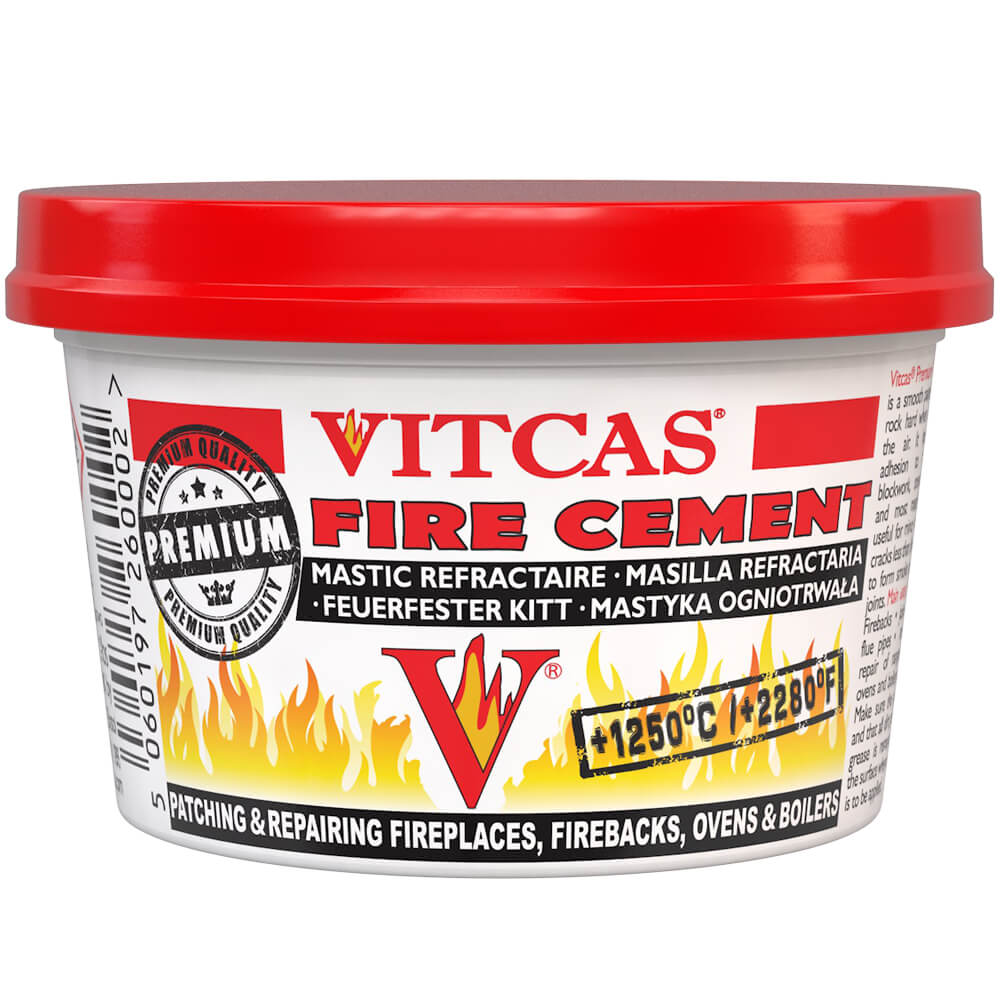
Premium Fire Cement is a ready-made compound for the described minor refractory indoor repairs. Consider it only after determining the damage and the substrate. Not every crack in the equipment should be filled with a rigid compound.
The door and wall require different products
When sealing, check the groove, compression and mechanism. Black stove rope is matched to a specific door format. The thicker variant does not replace the assessment of the hinge or frame, which may have shifted.
Heat Resistant Plaster creates the described smooth finish on compatible substrates. A plaster crack should be identified along with the layer beneath it. Thin surface material does not restore a damaged masonry substrate.
Plan the preparation schedule
Separate cleaning from repairs that require setting, drying, and further inspection. Also take into account the flue pipe and the inspection required for the entire device. Examination of visible surfaces does not describe all hidden connections.
Record the work performed, products, and dates. After the required preparation, compare the state of the fireplace again when cold. Such an inspection allows you to enter the season with a clear history of changes and explained defects instead of buying various repair compounds only after the first ignition.