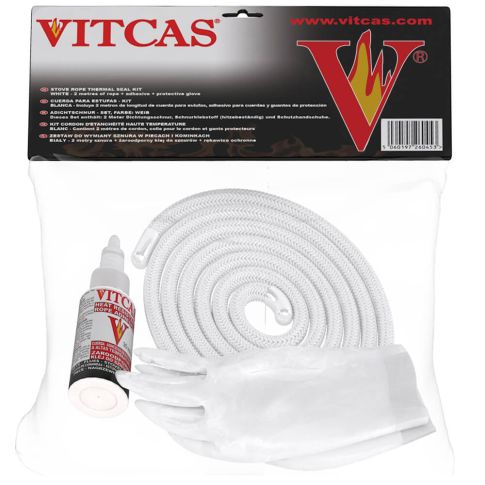
By late winter, a fireplace has been through many heating and cooling cycles. Compare its condition with the start of the season: does the rope seal still fit evenly, is the firebox lining in place, and have any cracks appeared in the surround? Inspect the appliance once it is completely cold, before cleaning away marks that could help identify a fault.
Start with changes you notice during use
Record whether the door closes differently, the glass gets dirty sooner or dust appears at a joint. Note when each change occurs: during lighting, after prolonged use or after cooling. This gives a technician more useful information than a close-up photograph alone.
Open the cold door and inspect the seal around its perimeter. Photograph frayed areas, loose ends and permanently flattened sections. Vitcas stove rope must match the gasket profile and construction required for the fireplace insert. A larger diameter will not repair a worn latch.
Firebox lining and surround: inspect them separately
Check the position of firebox panels, bricks and baffle supports. Avoid moving parts experimentally if you do not know how they fit. A loose section or missing material exposing the appliance body needs an assessment of the repair required.
On the surround, look for recurring cracks and discolouration near the grilles. Keep air inlets and outlets clear. A compound for suitable small rigid repairs, such as BLACK Fire Cement, will not replace a missing panel or correct movement in the surround structure.
Separate routine tasks from planned spring repairs
- Clean accessible surfaces and record their condition as described in the appliance manual.
- Plan replacement parts after confirming their reference, dimensions and material.
- Refer recurring cracks, draught problems or smoke entering the room to an installer or chimney professional before further use.
Keep the February photographs with the inspection date. After repairs, you can compare the same areas and see whether a fault returns, rather than judging the result only by a newly finished surface.